01 / The first day
Make room for
the first day.
Prepare the few things that matter, and leave yourself enough room to arrive. A practical guide for Canadian travellers, close to home or further away.
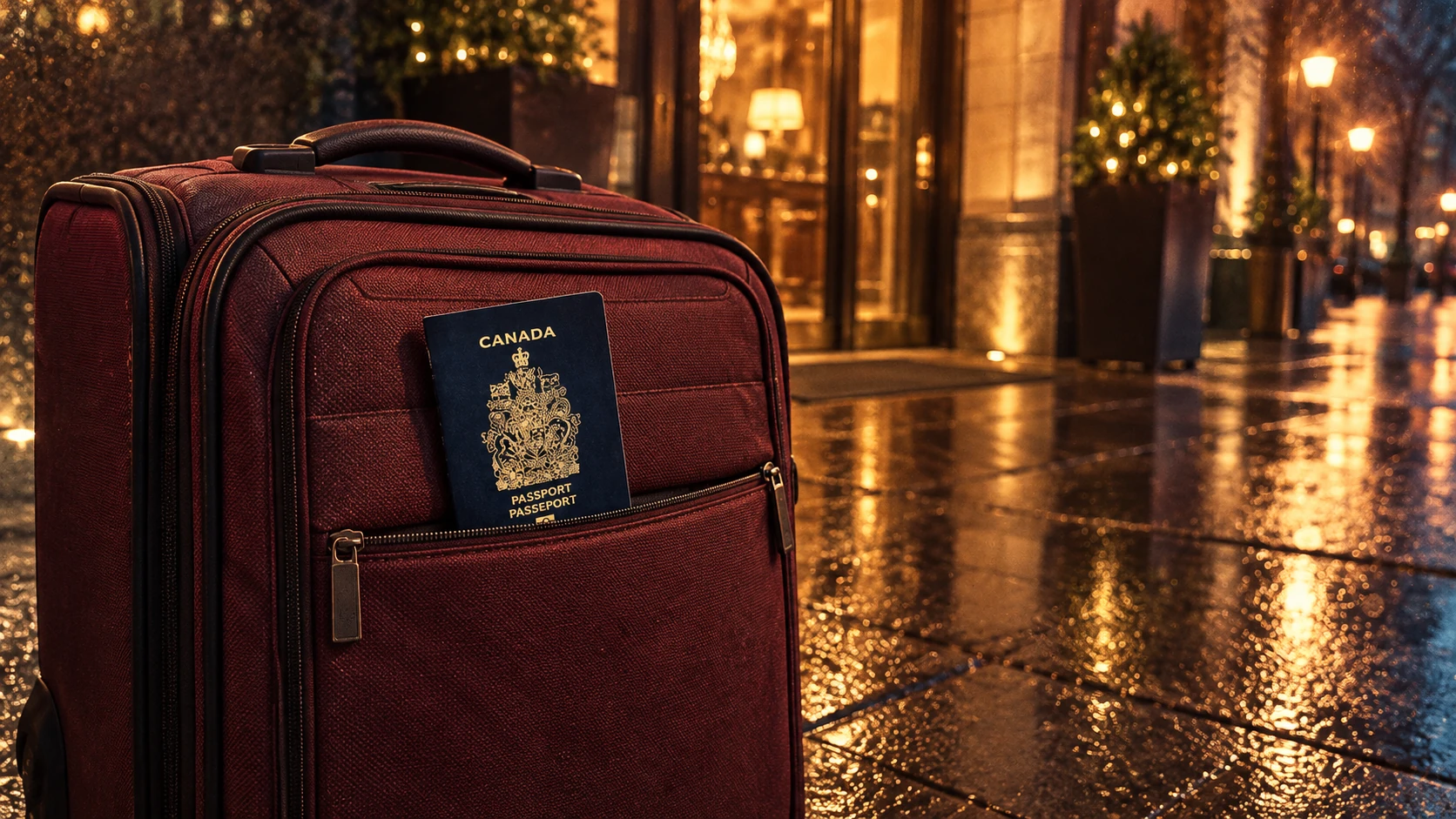
A first day has an awkward shape. The journey may be over, but you are still carrying it: a bag to put somewhere, an address to find, a message to send, a few arrangements that looked simpler at home. A little preparation can give those tasks a place, so that they do not occupy the whole day.
This guide offers an editorial approach to arriving. It does not set a pace you must follow. A visit across Canada, a family stay and an international holiday can need different arrangements. Start with your own booking, route, access needs and travelling companions; make the plan as detailed as those circumstances require.
01 Let one page carry the essentials.
Before leaving, make a short arrival note in a place you can open without searching through a crowded inbox. Include the accommodation’s full address, the correct arrival date, the provider’s contact details and the instructions you have received. Keep a confirmation reference with your private records, rather than in a message you plan to share widely.
Separate a confirmed arrangement from an unanswered question. “Check-in instructions received” and “ask about arrival after the usual hours” describe different states. That small distinction makes a note more useful than a list in which everything looks settled. Revisit the open questions while you still have time to contact the provider.
For an international journey, read the official entry and exit information for the destination and any transit points. Requirements depend on your documents and itinerary; possession of a reservation does not resolve them. Start with Canada’s destination advice and the official visa guidance, then follow the relevant destination authority’s instructions.
02 Give the last stretch its own plan.
It is easy to describe a trip by its longest leg and leave the final connection as “get to the hotel.” Instead, write down the point where that leg ends and the next practical step. Which exit or pickup instructions will you use? Where is the address saved? What will you do if the option you expected is unavailable?
Choose a fallback that you can actually evaluate. It might mean checking a second official transport source or keeping your host’s arrival contact accessible. Avoid turning an estimated journey time into a promise, and ask the provider about any arrangements on which your arrival depends. This publication has not checked live services, fares or availability.
If a connecting flight is involved, ask the airline where you will next collect your checked bag. Toronto Pearson’s baggage guidance is a useful reminder that transfer arrangements can differ between flights and airlines. Keep the answer alongside the arrival note, not as an assumption you have to test at the destination.
03 Settle the practical part of the stay.
When you arrive, pause long enough to establish the basics with your accommodation provider. Confirm that the arrangements match your booking and clarify anything you do not understand. If you requested a particular access arrangement or another essential feature, verify it directly; a general description of a property cannot confirm your individual needs.
Keep the address and a way to reach the provider accessible when you go out. Establish how you will enter later, where instructions are recorded and how to raise a problem. You do not need to learn every feature of a place immediately. Concentrate on the details that would be inconvenient to discover only when you need them.
Think briefly about departure, too. Put the agreed checkout arrangements and onward journey in your note. This is not a reason to begin the return trip in your head; it is a way to stop an unfinished administrative task from following you through the stay. Our accommodation notes offer a fuller set of questions.
04 Leave the first outing small.
Consider making your first plan easy to change. A short look around, a meal you have not fixed to a tight time or a quiet evening may suit the arrival better than a sequence of commitments. The point is not that every traveller should slow down. It is that the plan should still work if the journey takes more attention than you expected.
If you travel with someone else, say what each of you needs before you begin adding activities. One person may want to unpack; another may want to find the route for the next morning. A short conversation can make those different preferences visible without turning either into the “right” way to travel.
As an illustrative planning scenario, imagine reaching a booked stay with one question unresolved: the instructions for a late return to the building. Settle that question before leaving for dinner. The imagined situation is deliberately ordinary. A useful arrival routine is built around practical details, not a claim about any particular hotel or city.
05 Keep a small, useful backup.
Make important arrival information available in a second form you can manage securely. That could be a paper address or an offline note. Do not turn the backup into an exposed collection of document numbers. Keep originals secure and share personal information only with the provider or authority that has a legitimate reason to receive it.
For travel abroad, the Government of Canada traveller’s checklist recommends leaving an itinerary and relevant document copies with a trusted person. Those copies are backups; they do not replace original travel documents. Decide how your trusted contact can reach you, and update the arrangement if the itinerary changes.
Finally, give the day a clear stopping point. Once the essential questions are settled, set the note aside. Preparation is useful when it frees attention for the place you came to see. If an eight-part structure would help, use our arrival and checkout checklist. A tick records something you have reviewed; it is not a travel authorization or a booking confirmation.
A few common questions
Before you close the notebook.
Does a trip within Canada require a Canadian passport?
A passport is one accepted option for domestic air travel, but other identification can qualify. Consult the official pre-boarding identification requirements for your circumstances. A photograph of a passport in this journal does not make it a requirement for every reader.
How much should I plan for the first day?
We suggest confirming the practical arrival arrangements first and leaving optional activities flexible. Your booking, access requirements, companions and preferences should determine the detail. There is no fixed number of activities that makes an arrival successful.
Do these photographs show places I can book here?
No. They are supplied travel illustrations used to support the theme of arrival and preparation. Elsewhere North does not offer accommodation, transport reservations or booking assistance.
Can I store passport or booking numbers in the checklist?
The checklist accepts only ticks against eight general topics. It has no document fields or uploads. Keep sensitive records in your own secure arrangements, outside this website.