03 / The return
Leave a little order
for coming home.
The return journey deserves its own page. Keep the final arrangements clear, and separate a domestic trip home from an arrival across an international border.
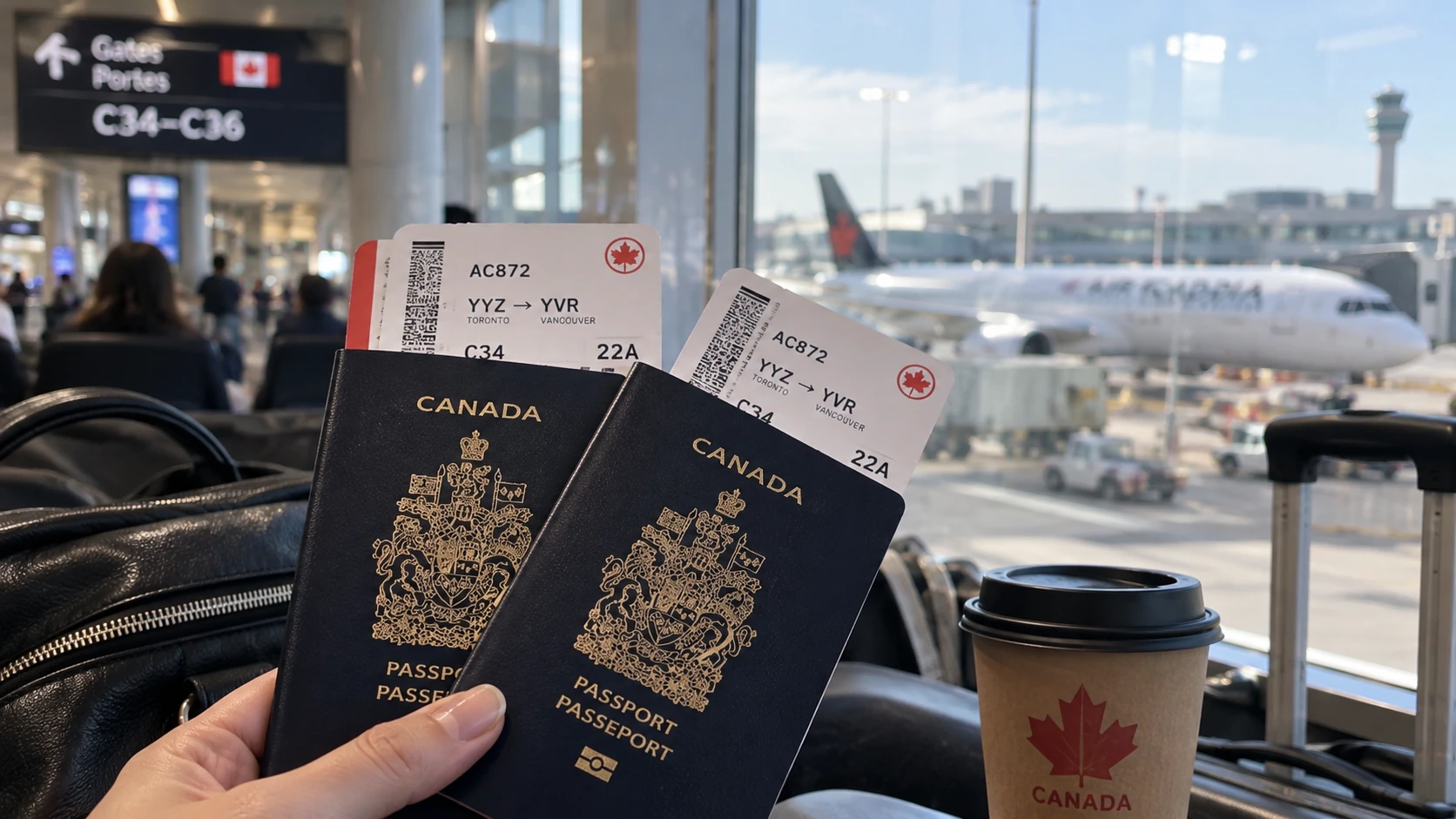
It is tempting to treat the way home as the outward journey in reverse. The transport may look familiar, yet the questions can be different. A bag may now hold purchases, the accommodation has a checkout procedure, and the document you need to board depends on your own circumstances and route.
Give the return a short note before the trip begins, then review it before you leave the stay. This is an editorial preparation method, not a customs assessment or a determination of anyone’s ability to enter Canada. Use the official sources linked here for the requirements that apply to you.
01 Name the journey you are making.
A trip that stays within Canada and a return from abroad should not share one undifferentiated border checklist. Write down whether your route is wholly domestic, crosses a border or includes an international connection. For air travel, check the official pre-boarding identification guidance and your carrier’s instructions against the actual itinerary.
Then record the practical sequence in your own words: checkout, the journey to the departure point, the booked transport and the final connection home. Use the confirmed dates and local times from your travel records. Keep estimates clearly separate from booking details, and review the sequence if a provider changes an arrangement.
02 Match documents to your circumstances.
Being a Canadian resident is not the same as being a Canadian citizen. IRCC’s entry guidance distinguishes these circumstances: Canadian citizens returning by air generally need a valid Canadian passport, with a stated alternative for American-Canadian citizens. Canadian permanent residents returning by commercial transport need a valid PR card or permanent resident travel document.
Read the official guidance for your status and mode of travel; the Canadian passport shown in an illustration does not describe every reader. Keep required originals secure and available for the relevant checks. A backup copy can help you organise a problem, but it is not a substitute for the document required to travel.
If your return involves another country, consult its transit and entry requirements as well. It is useful to review the entire route while there is still time to resolve a question. Do not wait until the last morning simply because the final destination is familiar.
03 Keep the receipts with the return note.
For Canadian residents returning from abroad, CBSA’s returning-to-Canada guide explains the declaration of purchases and gifts, including duty-free purchases. Food, plant, animal and related products must be declared. Keep receipts accessible and ask a border services officer when unsure about an item; some products are restricted or prohibited.
As a practical habit, collect receipts during the stay rather than reconstructing them at the end. Keep a simple private note about what you acquired and where the supporting record is stored. If something was a gift, do not leave it out of your preparation merely because no money changed hands at the moment you received it.
Our checklist does not calculate exemptions, duties or taxes. The CBSA guide linked above covers personal goods for residents returning after international travel of less than a year; other circumstances may need different guidance. A journey wholly within Canada does not become an international customs arrival because your bag contains a passport.
04 Do not forget the journey after arrival.
Review how you expect to get home from the station, airport or other arrival point. Confirm any arrangement on which you are relying and keep the relevant contact accessible. Leave room for a change without inventing a guaranteed transfer time. Check current transport information with the operator when it matters.
Think about what you want available in the bag you can reach. The essentials will differ between travellers, but they may include a charger, the address for the final stop and any documents still needed on the route. Leave sensitive information in your own secure records rather than writing it into a public or shared travel note.
05 Close the practical part of the trip.
Once home, put originals and remaining receipts where you normally keep them. If you need to follow up with a provider, preserve the relevant dates, confirmations and correspondence. You can then remove temporary arrival instructions and old access details from the places where they no longer need to be available.
Review the checklist rather than allowing old ticks to describe the next journey. Reset it when the trip is finished, or clear the optional browser storage in your privacy choices. Keep a useful lesson if you have one: a clearer packing note, a better question for a host, or simply the decision to leave more room on the first day next time.